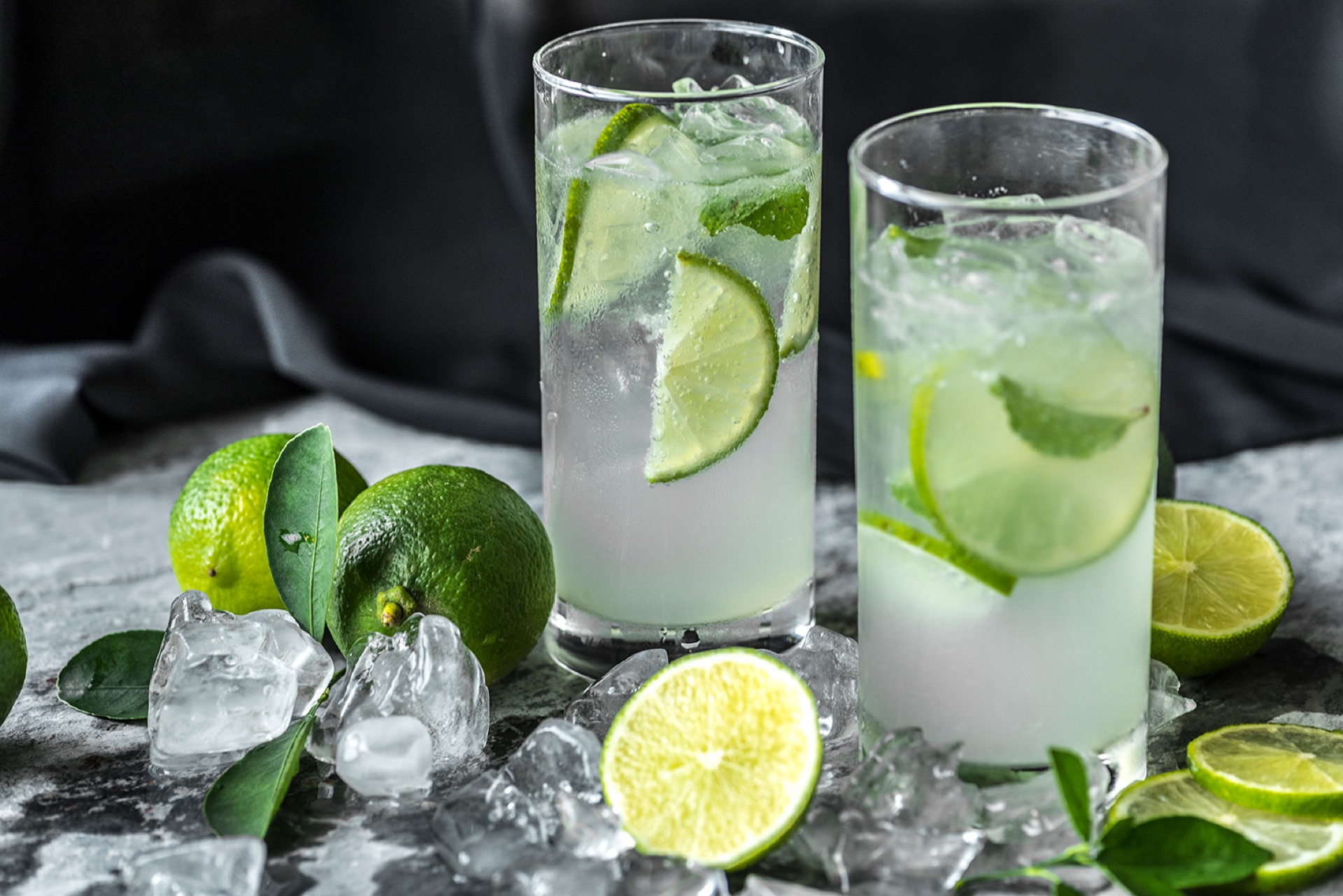
Highballs and fizzes: the two-ingredient family worth taking seriously
This is the family you already make. Gin and tonic. Whiskey and soda. Vodka soda with a lime. Nobody calls those cocktails, which is exactly why most of them are worse than they need to be.
A highball is roughly 2 oz of spirit stretched with 4 to 6 oz of something carbonated, landing near 9 oz in the glass. Two thirds of what you are drinking is the mixer. That is the entire family, and it is the largest-volume, lowest-effort, most party-friendly set of drinks in the whole canon.
It is also the family with the least anywhere to hide. A sour has three ingredients arguing with each other, and a small mistake gets absorbed. A highball has two. If either one is wrong, that is the drink.
The template
2 oz spirit · 4 to 6 oz carbonated mixer · ice to the top. Built in the glass, never shaken.
The range on the mixer is real and worth using. Four ounces gives you a drink with presence, which suits tonic and ginger beer. Six gives you something long and sessionable, which suits soda water on a hot afternoon. Pick deliberately rather than filling to the rim by reflex.
The classics, all the same shape:
- Gin and Tonic. Gin, tonic, lime. The reference highball.
- Mojito. Rum, lime, sugar, mint, soda. A sour that got lengthened, which is why it is the most work in this family.
- Tom Collins. Gin, lemon, sugar, soda. A Gin Sour with bubbles on top.
- Moscow Mule. Vodka, lime, ginger beer. The mixer is doing nearly all the flavor work.
- Paloma. Tequila, grapefruit soda, lime, salt. Better than a Margarita in the heat and about a tenth of the effort.
- Aperol Spritz. Aperol, prosecco, soda. Low proof by design and built for daylight.
- Cuba Libre. Rum, cola, and a genuinely necessary squeeze of lime.
- Whiskey Highball. Whisky and soda, and in Japan a matter of real technique and pride.
The mixer is the drink
Here is the shift that improves every highball you make: in this family the spirit is not the main character. It occupies about a fifth of the glass. The mixer occupies most of it, so the mixer decides how the drink tastes.
Which means upgrading your gin does much less than upgrading your tonic. A mediocre gin with excellent tonic makes a better drink than excellent gin with the flat supermarket stuff that has been open in the fridge door since last summer. If you are going to spend money anywhere in this family, spend it on what comes out of the small bottle, not the big one.
It also means swapping the mixer is the fastest way to invent something. Gin with grapefruit soda is a different drink from gin with tonic in a way that gin-to-vodka never manages.
Carbonation is an ingredient, and it is fragile
Everything that makes a highball good is the bubbles, and almost everything people do by habit destroys them.
Open the mixer fresh. Carbonation starts leaving the moment the seal breaks and it does not come back. Small bottles and cans exist for exactly this reason. A large bottle used across a weekend is flat by Saturday night.
Everything cold before it meets. Cold liquid holds gas; warm liquid releases it. Chill the mixer, chill the glass, and use cold spirit if you can. Pouring cold soda into a warm glass is how you lose half the fizz before the first sip.
Pour gently, down the side. Splashing knocks the gas out. Tilt the glass and let the mixer run down the inside.
Stir once, or not at all. One slow lift with a bar spoon is enough to combine. Stirring like you would a Negroni is a way to make a flat drink on purpose.
Ice: more, not less
The instinct to use less ice so the drink is "stronger" produces a worse drink every time.
Fill the glass. A full glass of ice melts slower, because the cubes chill each other and there is less warm air and liquid in contact with each one. A half-filled glass gives you a drink that is lukewarm and watery within minutes, which is the exact outcome the person was trying to avoid.
Use fresh, dry cubes straight from the freezer. Ice that has been sitting out is already wet, and that surface water dilutes instantly on contact.
Why this is the family to serve at a party
Every other family fights you at scale. Sours need shaking one at a time. Spirit-forward drinks need stirring and precision. Tiki needs five ingredients and crushed ice.
Highballs are built in the glass in about fifteen seconds, they are lower in alcohol by volume so people can have two without the evening changing character, and they are the easiest drink to hand someone who says "whatever is easy."
The move for a group: set out one spirit, two or three mixers, a bowl of citrus wedges, and plenty of ice, and let people build their own. It scales infinitely, requires no bartender, and everyone gets the drink they actually wanted. If you would rather batch something ahead, that is a different technique, and we covered it in batching cocktails for a party.
How to build your own
Change the mixer first. It is two thirds of the drink, so it is the biggest available lever. Tonic, soda, ginger beer, grapefruit soda, cola, sparkling wine, coconut water, even cold tea with bubbles added.
Add a citrus wedge, always. A highball without acid reads flat even when the carbonation is fine. This is the single most common miss in the family, and it costs nothing to fix.
Add a quarter ounce of something interesting. A small pour of amaro, elderflower liqueur, or a flavored syrup turns a two-ingredient drink into something that tastes composed. Keep it under half an ounce or you have left the family and built something longer and sweeter.
Salt the rim occasionally. Underused outside the Paloma and Margarita. Salt suppresses bitterness and lifts the fruit, and it makes a simple drink taste considered.
FAQ
What is a highball cocktail?
A highball is a spirit lengthened with a carbonated mixer and served over ice in a tall glass. The usual build is 2 oz of spirit to 4 to 6 oz of mixer, around 9 oz total. Gin and tonic, whiskey and soda, and the Moscow Mule are all highballs.
What is the ratio for a highball?
Roughly 1 part spirit to 2 or 3 parts mixer. Use the lower end for assertive mixers like tonic and ginger beer, and the higher end for soda water when you want something long and refreshing.
Why is my gin and tonic flat?
Almost always the tonic. Carbonation escapes as soon as a bottle is opened and never returns, so a large bottle opened days ago will be flat. Use small bottles or cans, keep everything cold, pour down the side of the glass, and stir no more than once.
Should you stir a highball?
Once at most, with a slow lift of a bar spoon. Extended stirring drives out the carbonation that defines the drink.
What is the difference between a highball and a fizz?
They are close cousins and share this family. A fizz typically starts as a sour with citrus and sugar and is then topped with soda, like a Tom Collins or a Ramos Gin Fizz. A plain highball is just spirit and mixer. Both are long, bubbly, and served over ice.
MixKings puts your menu on the TV, so a party of people building their own highballs can see exactly what is on offer.