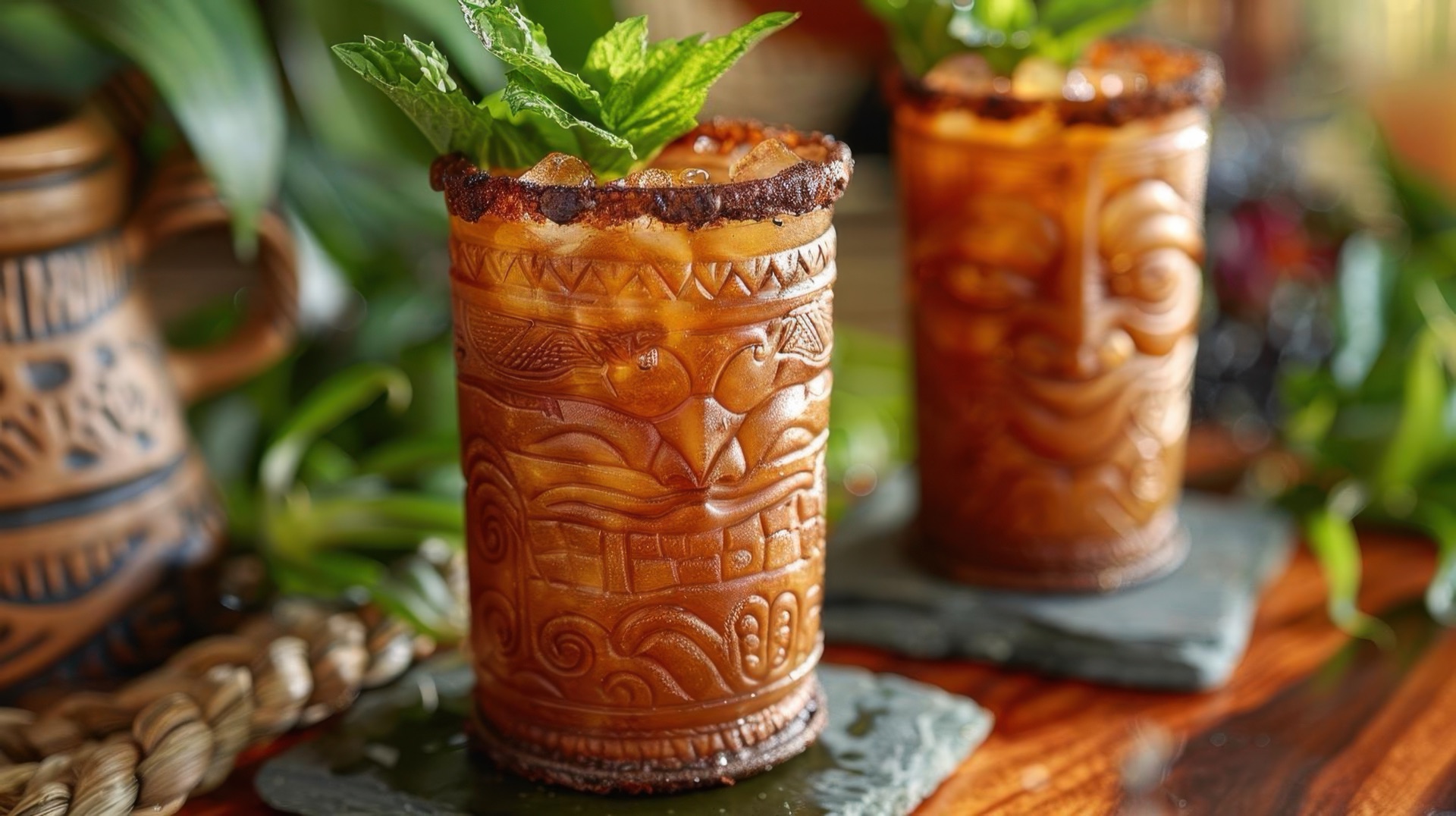
Tiki cocktails: why the real ones are not sweet
Most people's idea of a tiki drink is a frozen slush the color of a highlighter, sweet enough to stand a straw in. That version is real, it is just not the original. It is what happened after decades of bar programs replacing fresh juice with sour mix and good rum with whatever was cheapest.
The actual drinks are tart, complex, strong, and closer to a well-built sour than to a smoothie. A properly made Mai Tai has four ingredients and no fruit juice beyond lime.
This is the most involved family in the canon, running near 7 oz with five or more ingredients, and it rewards the effort more than any other. Here is what actually makes a tiki drink work.
Tiki drinks are sours in disguise
Strip a Mai Tai down: rum, lime, orgeat, orange curaçao. That is a spirit, a citrus, and two sweeteners. It is the sour template with the sweetener slot split in two.
The same holds across the family. A Daiquiri with a bit of grapefruit and maraschino is a Hemingway. A Daiquiri with cinnamon syrup and a second rum is halfway to a Navy Grog. The structure never changes; the layering does.
To be precise about the boundary, since it is the kind of thing that gets argued about: a plain Daiquiri is a sour, not a tiki drink. It is the starting point rather than a member. Tiki begins where the Daiquiri ends, at the second rum and the second sweetener.
That matters practically, because it means everything you know about balancing a sour applies here. Too sweet and it reads as candy. Too tart and it bites. The extra ingredients are texture and depth, not a different set of rules.
What genuinely separates tiki from sours is scale. More liquid, more ingredients, more ice, and a base that is usually more than one bottle.
The template
2 to 3 oz rum, usually split across two · 1 oz lime · 1 to 1½ oz combined syrups and liqueurs · crushed ice. Around 7 oz in the glass once the ice does its work.
Three things to notice. The base is larger than in any other family except beer drinks. The citrus is fixed at about an ounce, the same as a sour. And the sweetener slot is doing much more work here, often two or three ingredients rather than one.
The canon, all built on that shape:
- Mai Tai. Aged rum, lime, orgeat, orange curaçao. The most misrepresented drink in the world and one of the best when made properly.
- Planter's Punch. Dark rum, lime, sugar, a little water. The oldest of them, and proof the family predates the tiki bars that made it famous.
- Jungle Bird. Blackstrap rum, Campari, pineapple, lime, sugar. The bitter one, and the easiest sell to someone who claims to dislike tiki.
- Painkiller. Navy rum, pineapple, orange, cream of coconut, nutmeg. The gateway drink.
- Piña Colada. Rum, pineapple, cream of coconut. Genuinely good when the coconut is real and the pineapple is fresh.
- Zombie. Three rums, lime, falernum, grenadine, absinthe, grapefruit. The maximalist statement, and traditionally limited to two per customer.
- Three Dots and a Dash. Aged rum, rhum agricole, lime, honey, falernum, allspice. Layering as an art form.
Crushed ice is structural, not decorative
This is the single change that will improve your tiki drinks most, and almost nobody at home does it.
These drinks are built on crushed ice for reasons that have nothing to do with looks. It chills a large, high-proof, syrup-heavy drink almost instantly, which cubes cannot do fast enough. It dilutes continuously as you drink, so a 7 oz cocktail that starts intense stays balanced to the bottom rather than turning syrupy. And it holds a garnish upright, which is why tiki presentation looks the way it does.
Serve a Mai Tai over cubes and it will taste sharper, heavier, and hotter, then go watery in the wrong way. Same recipe, different drink.
You do not need equipment. Put cubes in a clean tea towel or a zip bag and hit them with a rolling pin or the flat of a heavy pan. Thirty seconds of noise buys you the correct texture. A cheap Lewis bag and mallet costs less than a bottle of decent rum if you decide you like doing it.
The syrups do the heavy lifting
Tiki's depth comes from its sweeteners, which is why this family lives next door to the pantry.
Orgeat is almond syrup with a little orange flower water. It is the flavor people cannot identify in a Mai Tai and the reason the drink tastes like more than rum and lime. Buy a good one or make it; the cheap versions taste like marzipan.
Falernum brings lime zest, ginger, clove, and almond in one bottle. It is the most efficient bottle in tiki and turns a plain rum sour into something that tastes composed.
Cinnamon syrup is the most underrated and the easiest to make: sticks steeped in simple syrup. It adds warmth without sweetness, which is exactly the trick these drinks rely on.
Passion fruit syrup is the tart-tropical note most people are reaching for when they say tropical. Use it where you would otherwise add more citrus.
Two syrups in one drink is normal here, and it is what separates a tiki cocktail from a rum sour. Each contributes a different layer, and no single one dominates.
Split the base
The move that defines this family: use two rums, not one.
Rum covers a wider range than any other spirit category. A light Puerto Rican rum is clean and nearly neutral. A Jamaican pot-still rum is intense, funky, and full of banana and overripe fruit. A Demerara is dark and treacly. Rhum agricole, made from cane juice rather than molasses, is grassy and sharp.
Those are not interchangeable, and a good tiki drink usually wants two of them arguing. An ounce of aged rum with an ounce of Jamaican gives you body and funk at once, which no single bottle delivers. This is why classic recipes look fussy about rum in a way that Margarita recipes never are about tequila.
If you own one rum and want to start here, buy a Jamaican as your second. It is the most distinctive addition and the one that most changes what you can make.
How to build your own
Start from a Daiquiri, the sour next door: 2 oz rum, 1 oz lime, ¾ oz simple syrup. Then work outward one step at a time until it becomes tiki.
Split the rum. One ounce becomes two half-ounces of different character. Nothing else changes and the drink is already better.
Replace part of the simple syrup. Half orgeat, half simple. Or falernum. Or cinnamon. Keep the total sweetener volume the same so the balance holds.
Add a small tropical juice. Half an ounce of pineapple or passion fruit, taken out of the lime rather than added on top, so the total acid stays put.
Then a few dashes of bitters and a real garnish. Mint clapped between your palms, a spent lime shell, freshly grated nutmeg. The aroma is a genuine part of the drink here, more so than in any other family.
Change one thing per attempt and taste each time. It is the same discipline as the other families, just with more slots available.
FAQ
What makes a cocktail tiki?
Rum as the base, usually more than one, fresh citrus, layered syrups such as orgeat or falernum, and crushed ice. They run larger than most cocktails, near 7 oz, and typically use five or more ingredients. The style comes from 1930s American bars, not from Polynesia.
Are tiki drinks supposed to be sweet?
No. Well-made tiki is tart and strong, closer to a complex sour than to a dessert. The very sweet versions come from decades of bars substituting sour mix and bottled juice for fresh citrus and real syrups.
Why do tiki drinks use crushed ice?
It chills a large, high-proof drink far faster than cubes, and it keeps diluting as you drink so the cocktail stays balanced to the last sip instead of turning syrupy. It is a structural ingredient, not decoration.
What rum should I buy for tiki cocktails?
Start with an aged blended rum for body, then add a Jamaican pot-still rum for funk. Those two cover most classic recipes. Many drinks call for splitting the base between them rather than using either alone.
What is orgeat?
An almond syrup with a touch of orange flower water. It is the ingredient that makes a Mai Tai taste like a Mai Tai. Quality varies enormously, so buy a good bottle or make your own.
MixKings keeps your syrups and rums on their own shelves, so a five-ingredient build is still findable next summer.