How to play MixKings: the cocktail party game, explained
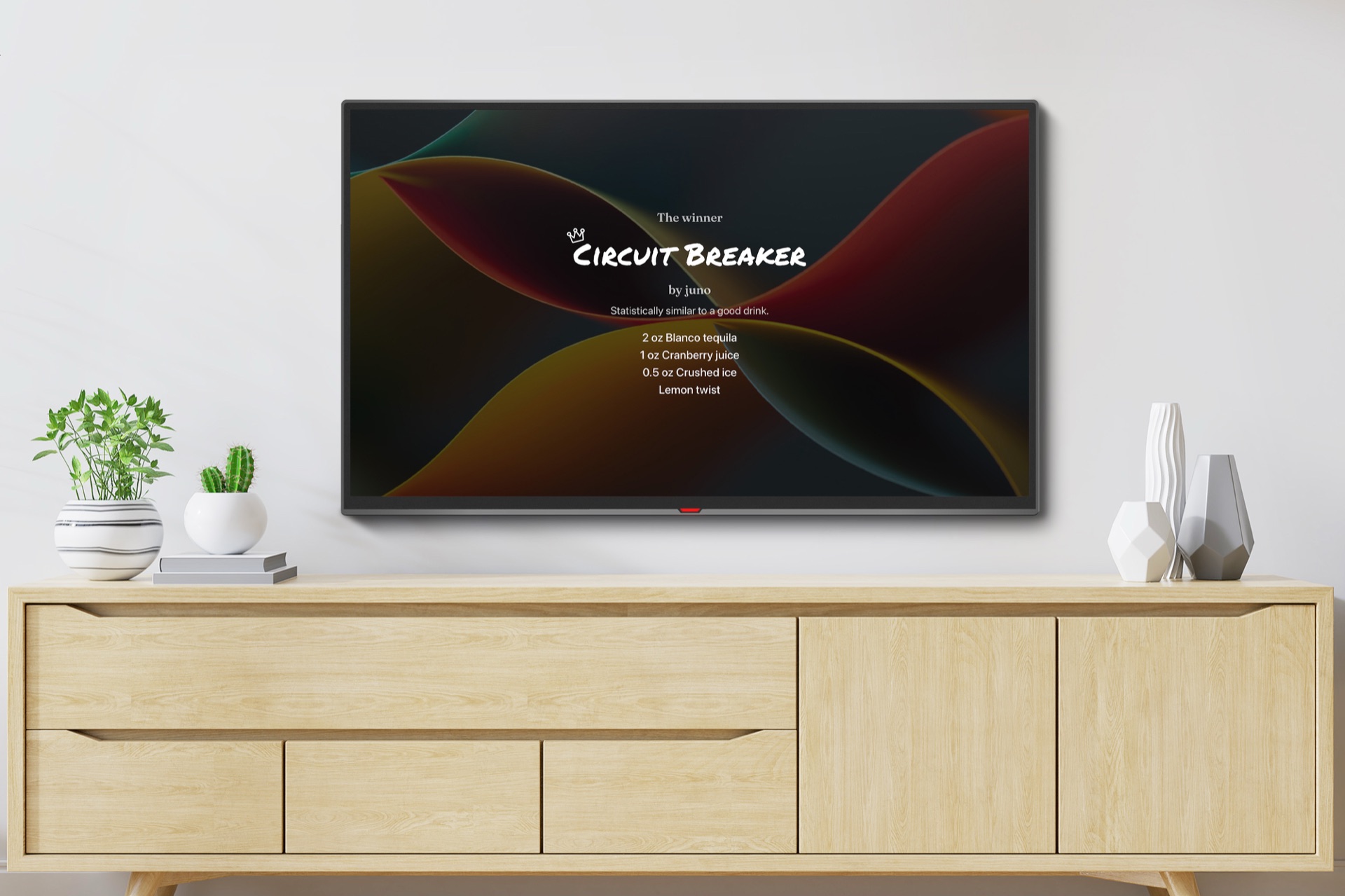
The short version: one person puts the game on the TV, everyone else joins from their phone with a code, and the room gets a theme. Each player builds a drink from what is on the shelf in front of them. The builds go up on the TV, and what happens next depends on the play style the host picked.
You do not need to know anything about cocktails to play. The game is built so that a person who has never made a drink can put together something good on their first turn, because it walks you down the structure rather than handing you a blank page.
Here is the whole thing, start to finish.
First, your shelf
This is the one piece worth doing before anyone arrives, and it is where new players most often get stuck.
A shelf is the set of bottles and ingredients available to build from. It is what makes the game yours rather than generic: the drinks people invent are drinks you can pour tonight, from what is in the room.
There are two ways to get one. If you already track bottles in My Bar → Inventory, tap Import from inventory and pick what is in reach. If you have not, you can build a shelf by hand in a couple of minutes. Add the base spirits you own, the citrus in the fridge, whatever syrups and bitters are in the cupboard, and the mixers.
It does not need to be complete or accurate to the bottle. Six or eight base spirits, lemon and lime, simple syrup, and a couple of liqueurs is a perfectly good shelf. You can edit it between rounds when someone finds the amaro nobody remembered buying.
If you want a fuller picture of what a well-stocked shelf looks like, we wrote a whole guide to stocking a home bar without buying everything. For a game night, though, work with what you have. Constraint is the fun part.
Hosting, joining, and the TV
One person hosts. From the Games tab, that is Host a game night.
The host picks where the game lives. If you have a paired Fire TV or smart display, choose it and the game takes over the screen the moment the join code appears. You can also cast from the Display tab. If there is no TV in the room, choose Play without a TV and everything runs on phones instead. The game works either way; the TV mostly makes the reveal better.
Everyone else opens the app, taps Join a game, and enters the code showing on screen. Names appear on the TV as people arrive, which is a small thing that does a lot of work in a living room.
You need at least two players to start. If you are short, the host can summon bots to fill out the field, which is also the fastest way to see how a round works before real people are watching.
First choice: what everyone builds
The host sets two dials before a round starts. The first is the mode, which decides what everyone is building. There are three.
Theme. Pick a drink category and everyone builds inside it. The nine themes are the nine major cocktail families: sours, spirit-forward, highballs and fizzes, tiki and tropical, flips and nogs, hot drinks, mocktails, wine and champagne, and beer cocktails.
The theme is not decoration. It changes what the builder puts in front of you, because each family has its own set of ingredients that matter and its own idea of what a good drink looks like. A sours round steers you toward citrus and a balanced sweetener. A spirit-forward round takes the citrus away entirely and asks you to work with vermouth and bitters instead.
That makes theme the difficulty dial too. Sours are the friendliest place to start, since the template is forgiving and most people have the ingredients. Spirit-forward is the purist's round. Mocktails put everyone on equal footing regardless of what they are drinking. Tiki rewards a deep shelf and punishes a thin one. If you want to get better at a theme, read the family; each of those articles is the strategy guide for that round.
Riff. Pick one base drink and everyone builds a variation on it. This is the mode that produces the sharpest comparisons, since every entry is answering the same question, and it is the best way to see how differently people read the same starting point. It is also the friendliest mode for a table that does not know many drinks, because nobody is starting from nothing.
Freestyle. The open one, with a few ways to run it. You can start from a blank slate. You can play to a prompt, either picking one or having the game generate it, which gives you a constraint without narrowing the drink to a category. Or the host can offer up their own library and let everyone choose something from it.
That last option is worth pointing out, because it is barely a game. It is a way to answer "what should we drink next?" when the table cannot decide. Everyone picks something from the host's library, and the play style you chose decides what happens to those picks. Five people settle the night's drinking in about ninety seconds.
Second choice: what happens after
The other dial is the play style, and it decides what the round is for. This one changes the night more than the mode does.
Drink the winner. Everyone votes on the builds as they come up, judging the name, the description, and how well the drink answers the room. The winner takes the crown, and somebody makes it. Worth being clear that this is a vote on the idea rather than the taste, since nothing has been poured yet. It is the quickest style and the right one for a first game.
Build a menu. No single winner. Every player's drink lands on a menu and the room does as it likes with it: work through all of them, or order à la carte across the evening. This is the style for a longer night, and the one that treats every build as worth making rather than just the best one.
Rounds. The host sets a number of rounds and you play through them. Each round has its own winner, and all the winners collect on a menu at the end. It is the structured version of an evening, and it scales the game up without letting any one round drag.
Taste-off. The competition format, and the closest thing here to how a real cocktail contest runs. Every drink gets made. The room tastes them without knowing who built what, and the host doing the making does not know either, so the blindness is real rather than a formality. Then everyone ranks the field from favorite to least and the algorithm settles it.
One quirk to know going in: this is the only style where you rank your own drink alongside everyone else's. Nothing stops someone putting themselves top, so it runs on the honor system. In practice that sorts itself out, since a drink nobody else rated well does not survive one generous vote.
It is also the most work, because every drink has to be built before anyone votes. Save it for a night when making six cocktails is the point rather than the obstacle.
Building a drink in five layers
Here is the part that makes the game playable by beginners.
Instead of a blank recipe card, the builder walks you down the structural layers of a cocktail, in the order you would build one at the bar:
- The base. The drink's engine. Pour generously.
- The balance. Sweet and sour that keep the base honest.
- The character. Small pours, big personality.
- The lengthener. Stretch and sparkle to length.
- The garnish.
Work top to bottom and you cannot really produce nonsense. The layers are the same skeleton underneath every drink in the canon, which is why the same five slots cover a Daiquiri, a Negroni, and a Tom Collins without changing shape.
Within each layer, ingredients are ranked by how often they appear in that family, shown as a scale running from green to amber. The green end is the staples, the things that show up in most drinks of that type. The amber end is the bold stuff, used rarely and deliberately.
That gives you an honest strategy choice rather than a guess. Build down the green and you will produce something solid and recognizable. Reach for amber and you might win the round or you might produce something nobody finishes. Both are legitimate ways to play, and the scale tells you which bet you are making.
Fine-tuning before you commit
Once the ingredients are in, you get a pass at the proportions.
Rather than asking you for quarter-ounce measurements, the app lets you push the drink along the axes that matter, boozier or softer, sweeter or drier, and it recalculates the pours for you. It also writes out the serving method: which glass, whether to shake or stir, whether it needs a dry shake to build foam, and what to do with the garnish.
This is where you can save a build that is nearly right. If your spirit-forward entry is coming out hot, ease it down and watch the vermouth come up to meet it. What you are learning while you do that is the same balancing instinct that every one of these families runs on.
Playing on your own
There is also Solo lab, which is the builder without the party attached.
Same layers, same theme guides, same fine-tuning, no lobby and no voting. It is the place to work out an idea before you inflict it on friends, or just a decent way to answer the question of what to make with what you have. Anything you build here can be saved to your library like any other drink.
It is also the easiest way to learn the builder, so if you are the one hosting on Friday, spend five minutes here first.
FAQ
How many people do you need?
Two to start. There is no real upper limit, and it works well with four to eight. If you are short a player or want to try a round solo, the host can add bots.
Do you need a TV?
No. Choose "Play without a TV" and everything runs on phones. A TV makes the reveal better and gives the room something to look at, but the game is complete without one.
Does everyone need the app?
Each player joins from their own phone with the app and the host's code.
Do you need to know anything about cocktails?
No. The builder walks you down the five layers and marks which ingredients are common in the theme you are playing, so a first-time player can build something good without knowing a single recipe.
Do you have to drink to play?
No. Mocktails is one of the nine themes, and it plays exactly like the others. Running a mocktail round is also the fairest way to include people who are not drinking without making it a separate activity.
What if my shelf is missing something?
Edit it between rounds. Shelves are meant to be adjusted as you find things, and a smaller shelf usually makes for a better game than an aspirational one.
MixKings turns your bar into a party game. Build from what you have, and let the room pick the winner.